

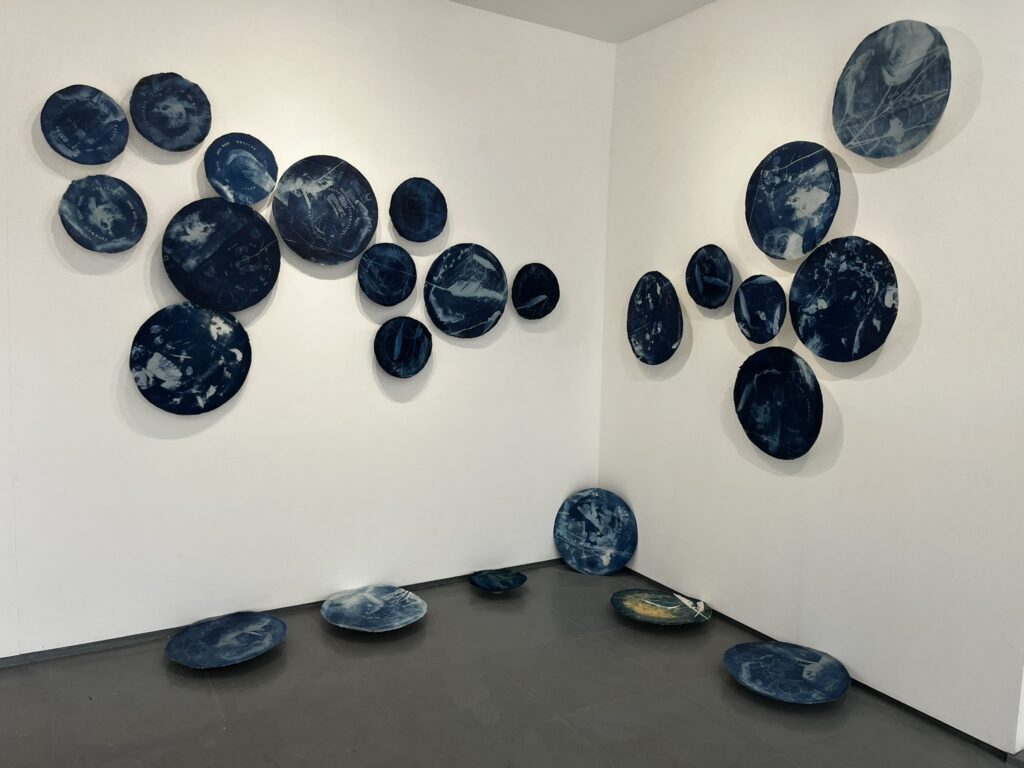



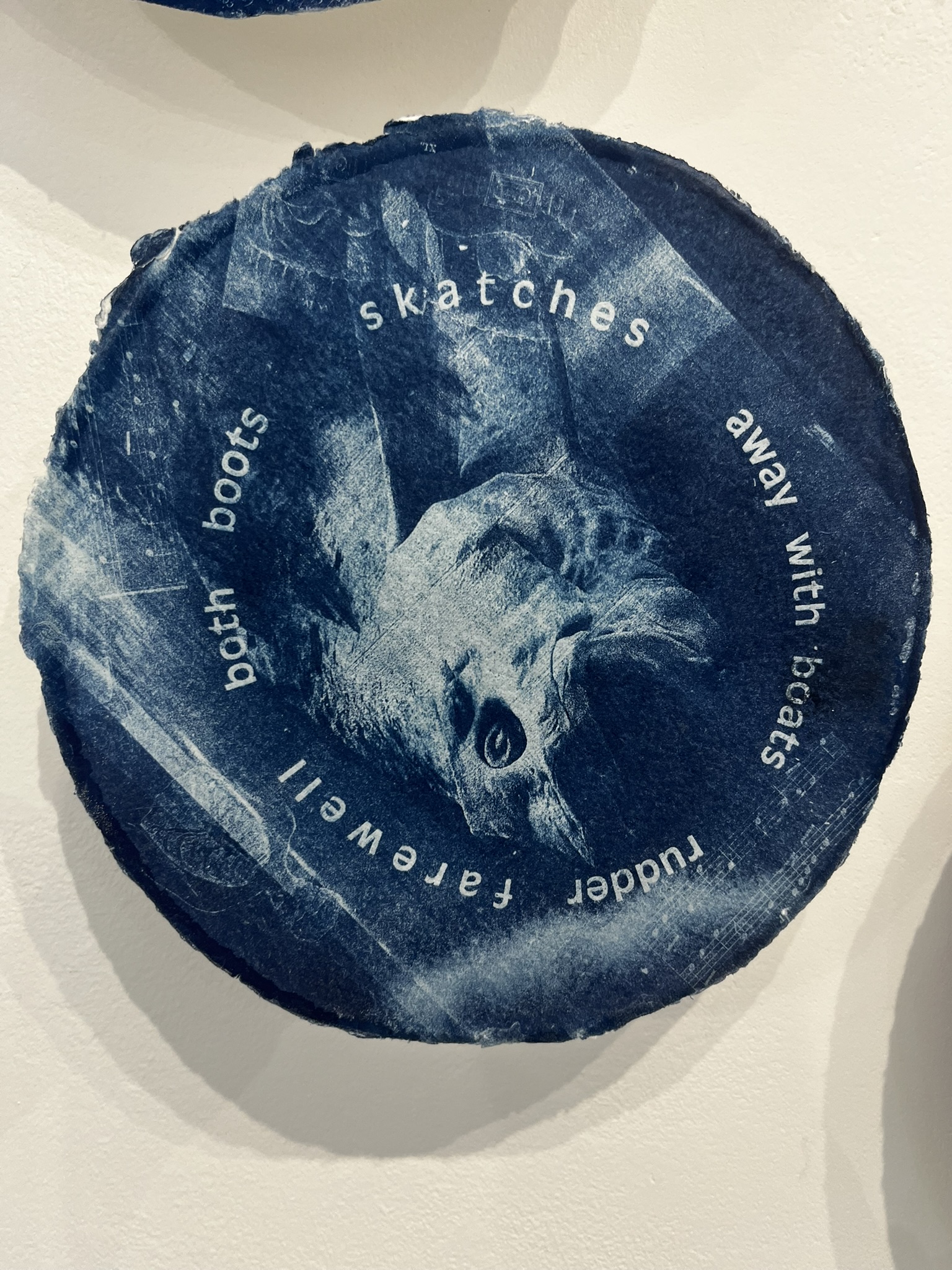
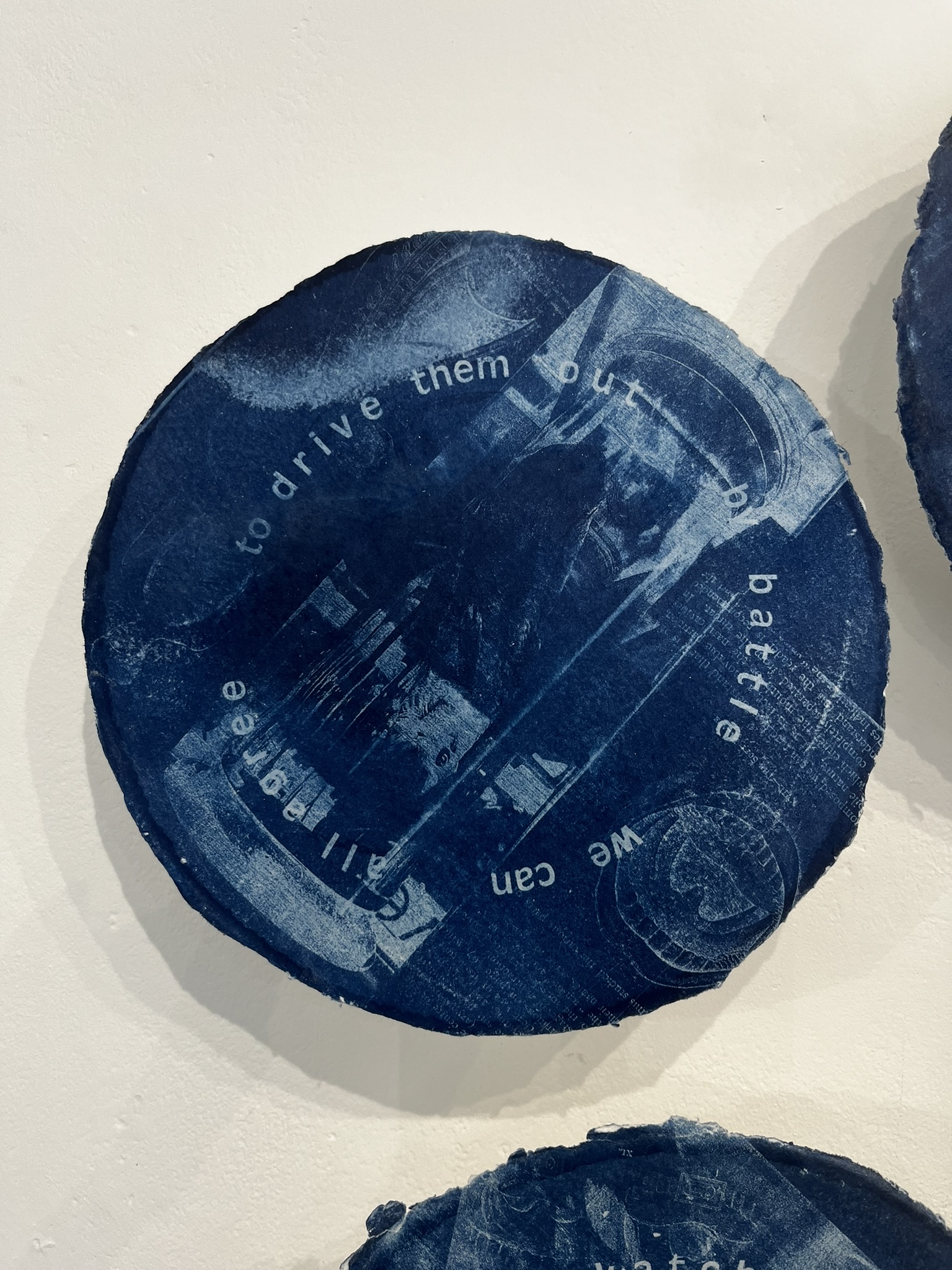
Cyanotypes. Redell Olsen, 2026.
Olsen’s work attempts to represent affinities, returns and circularities between histories of extinction, working class protest and the effects of anthropogenically produced climate crisis on human and non-human bodies and habitats.
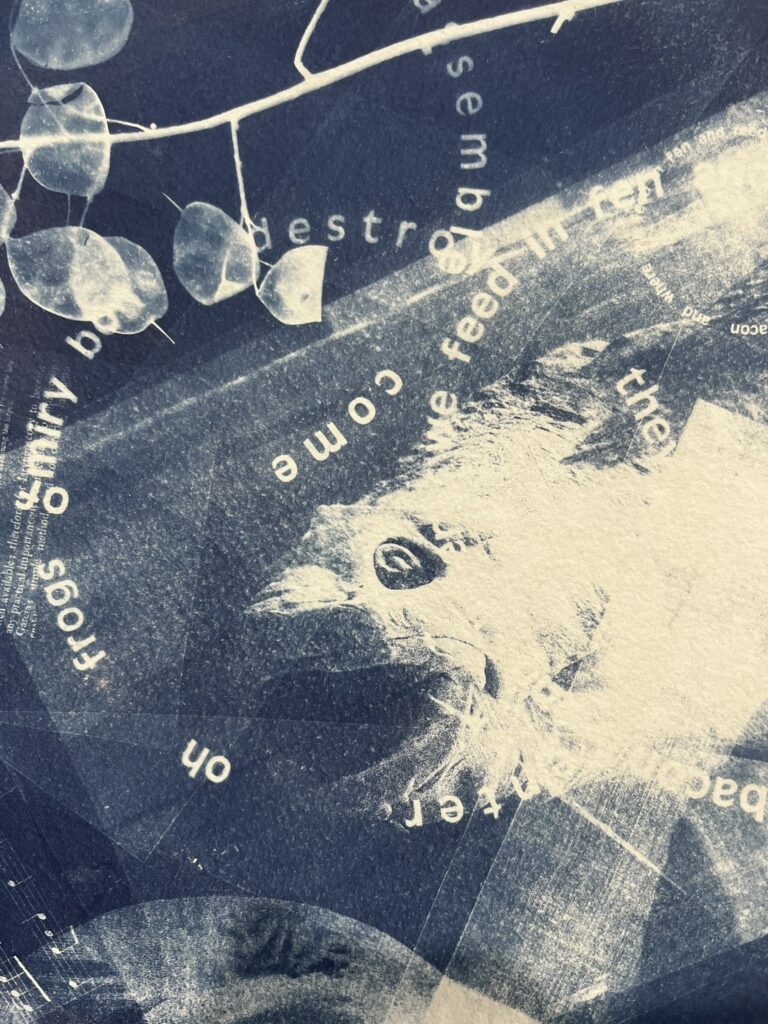
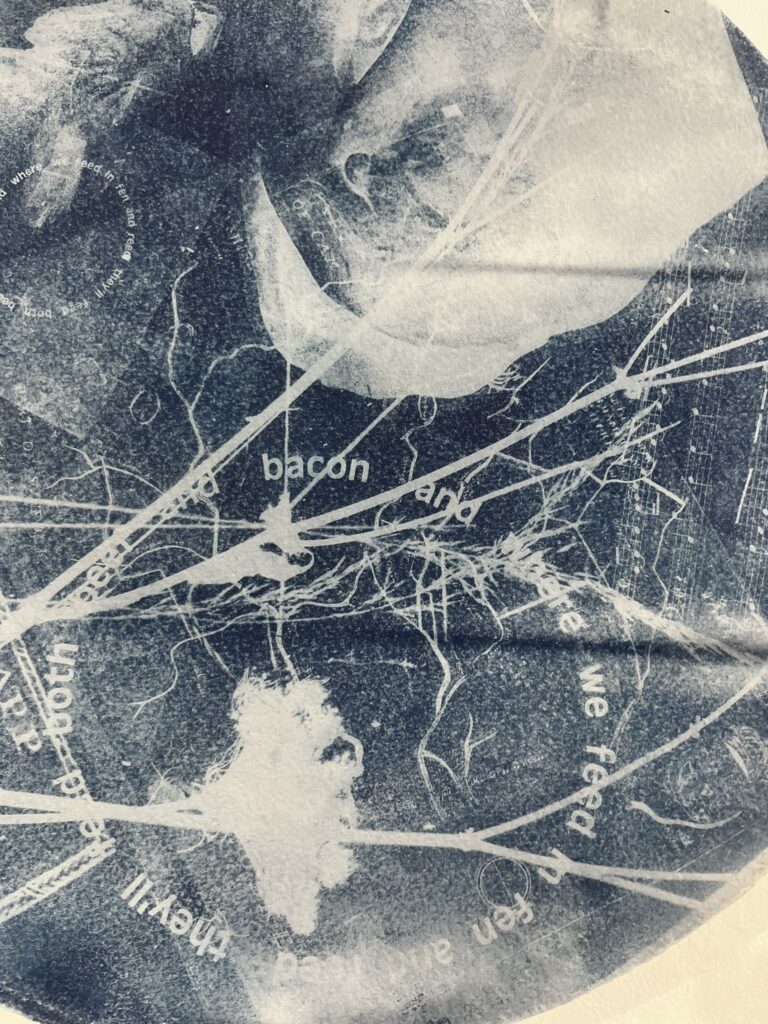
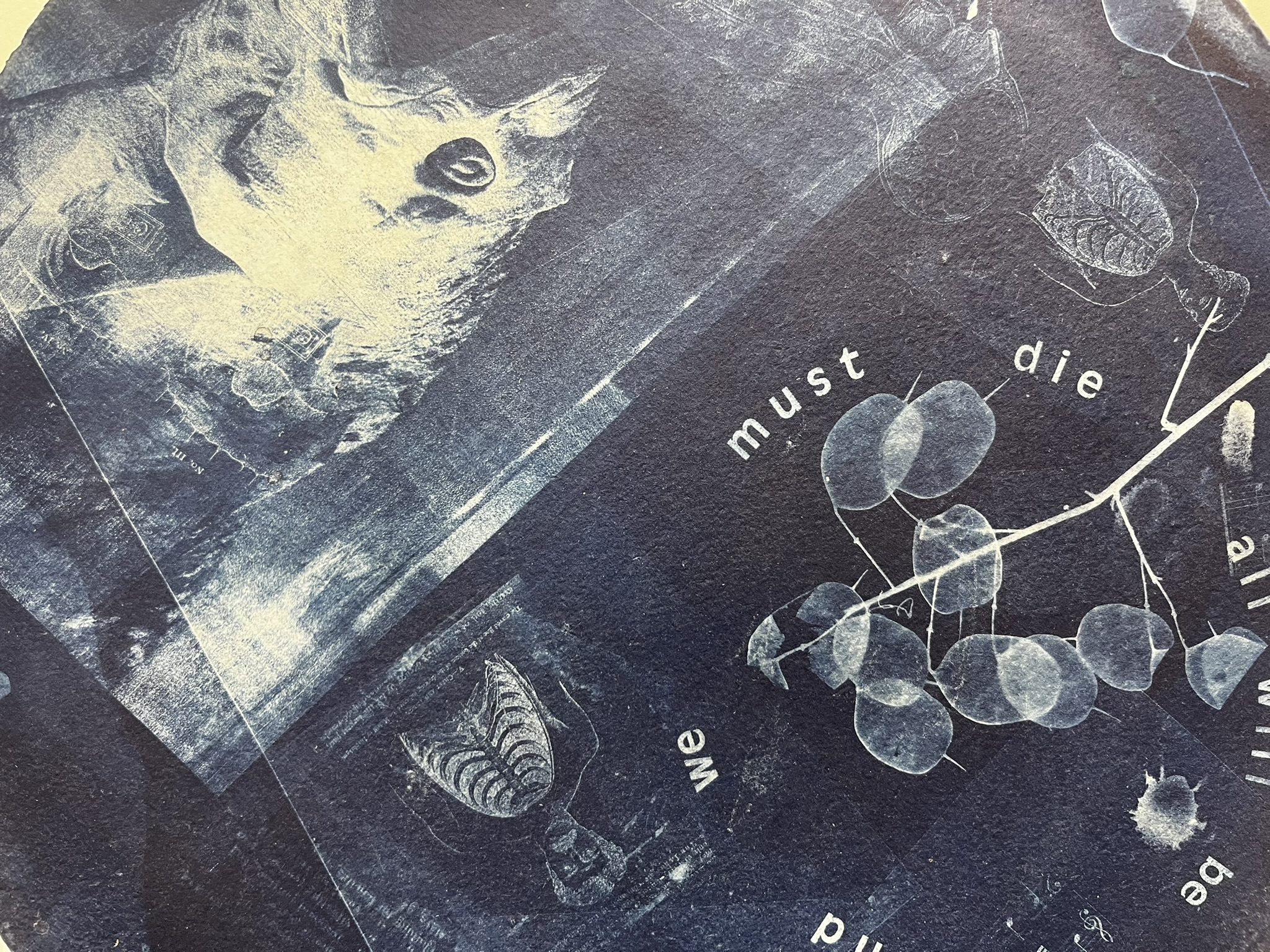
The protest song, ‘The Powte’s Complaint’ was composed around 1611 by the unknown author and agitator, Penny of Wisbech. In 1662 William Dugdale recorded, ‘The Powte’s Complaint’ as an example of the ‘making of libellous songs to disparage’ plans by local landowners (known as ‘the adventurers’) to drain the fens for their own profit at the expense of the existing human and other livelihoods of the region. The singer of the song is imagined by Penny of Wisbech to be a powte, a type of eel, or fish called a Burbot.
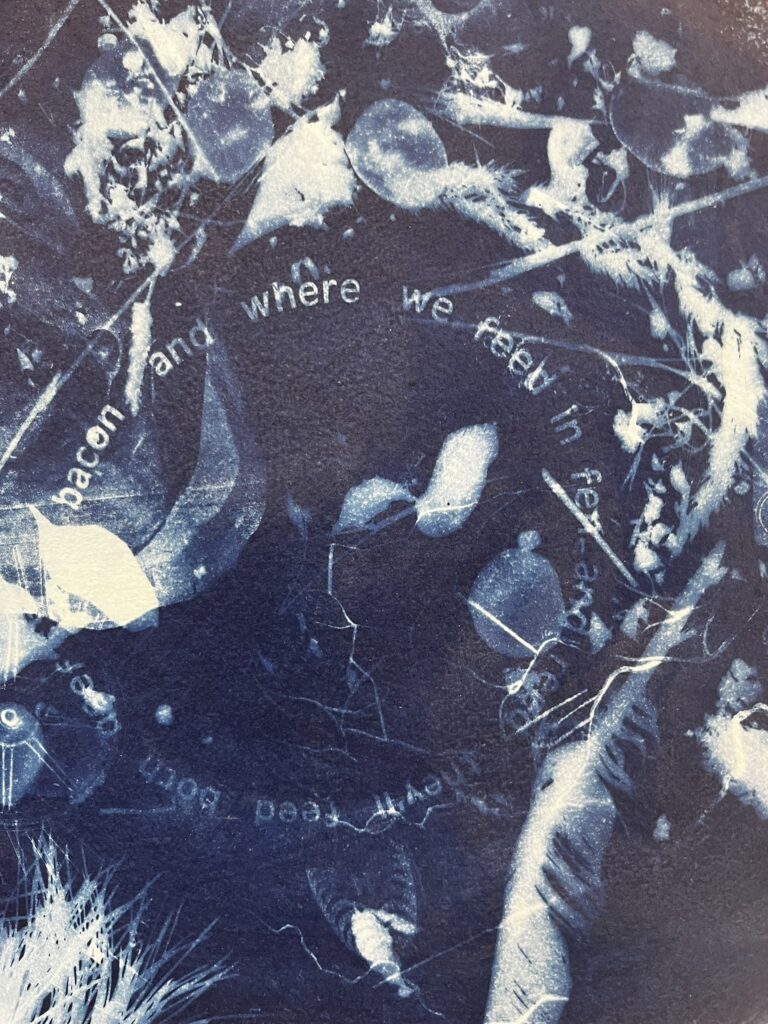
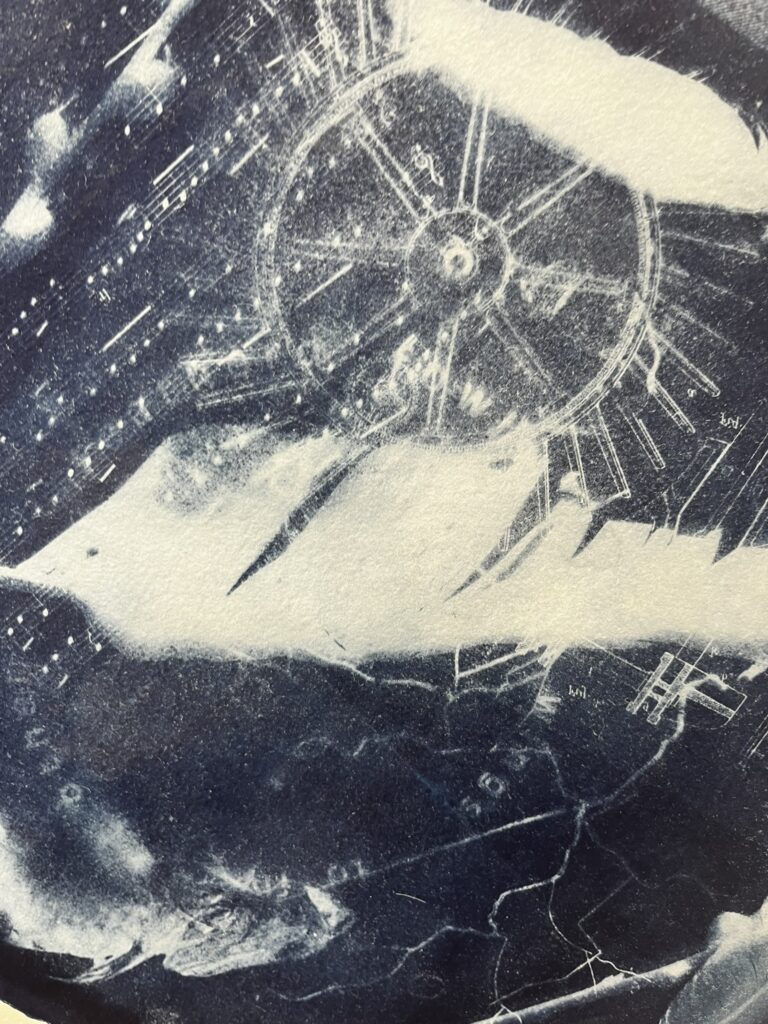
The last known Burbot of the fens was caught on 14th September 1969 by John Dean near Aldreth and is preserved in the Museum of Zoology in Cambridge. In order to mark the anniversary of this extinction (nearly 57 years ago to the day) Olsen used her own photographs of this specimen as the basis for the making of her negatives. In the making of these negatives she also used images, maps from the history of the fens alongside diagrams and extracts from late 19th Century pseudo-scientific books on the singing body. These negatives were recombined with organic matter from the landscape (plants and feathers) in different combinations during the sun printing process that is the core element of cyanotype printing. The circular shape of the individual cyanotypes is reminiscent of the shape of vinyl LPs, Stockhausen’s round shaped score, ‘No.11 Refrain’ (1959), as well as the circular staves of the late 14th Century Chantilly Codex, also arranged in circle form for two voices in a round.