Rough/ruff books: a D-I-Y concertina poetics as art writing with Redell Olsen
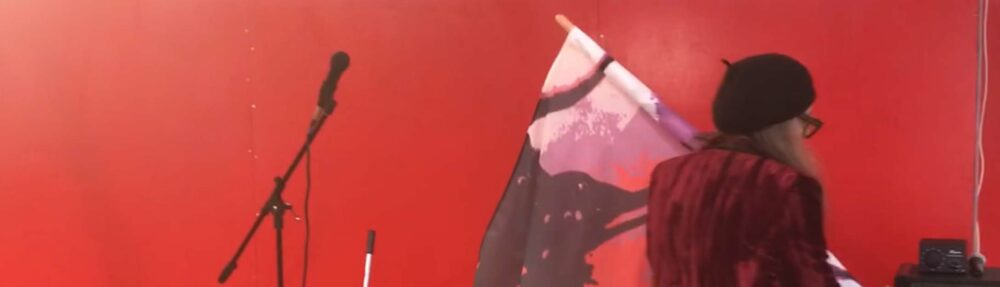
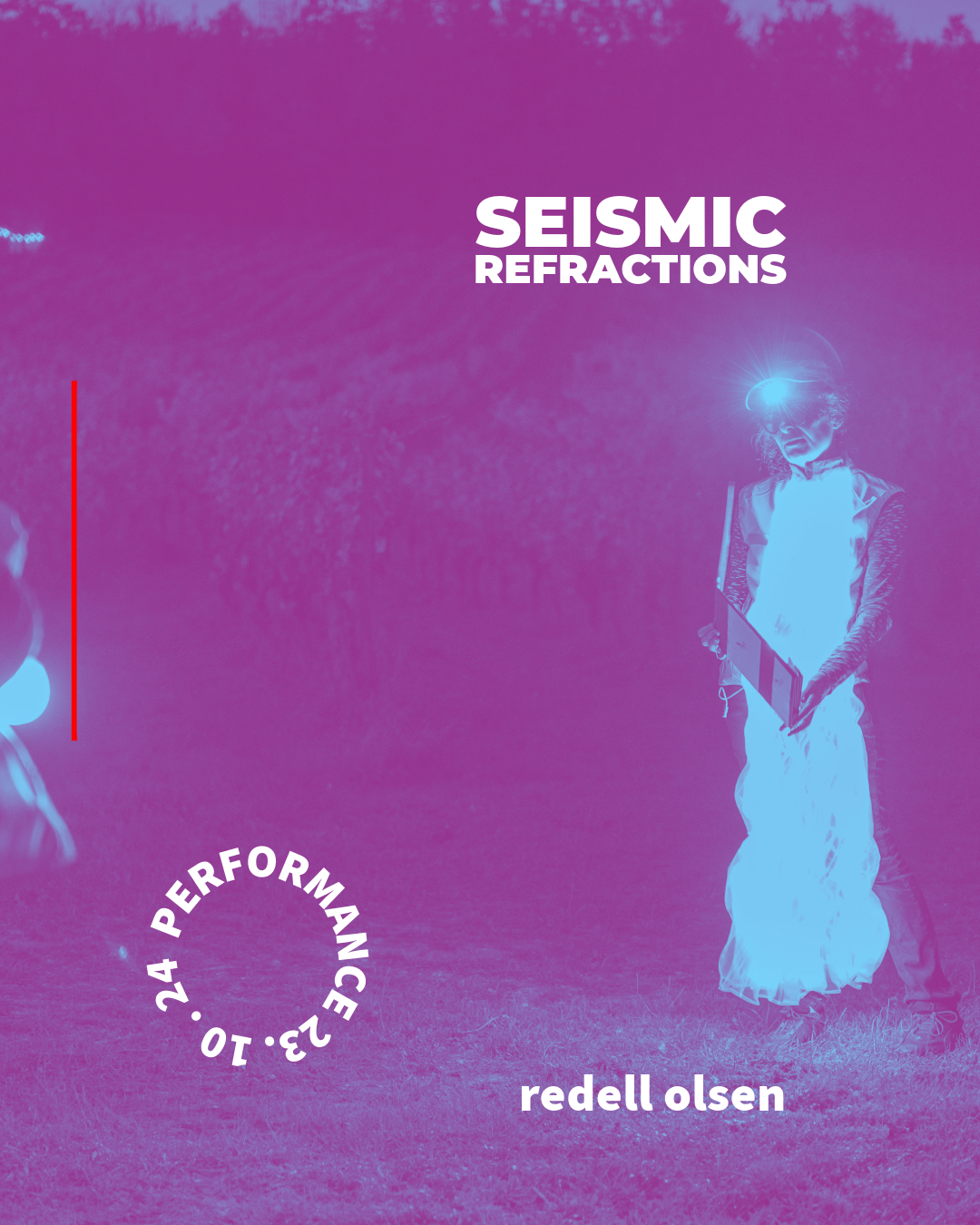
The second Out of Practice Seminar (Oops) @ Goldsmiths presents a performance talk by writer and visual artist Redell Olsen.
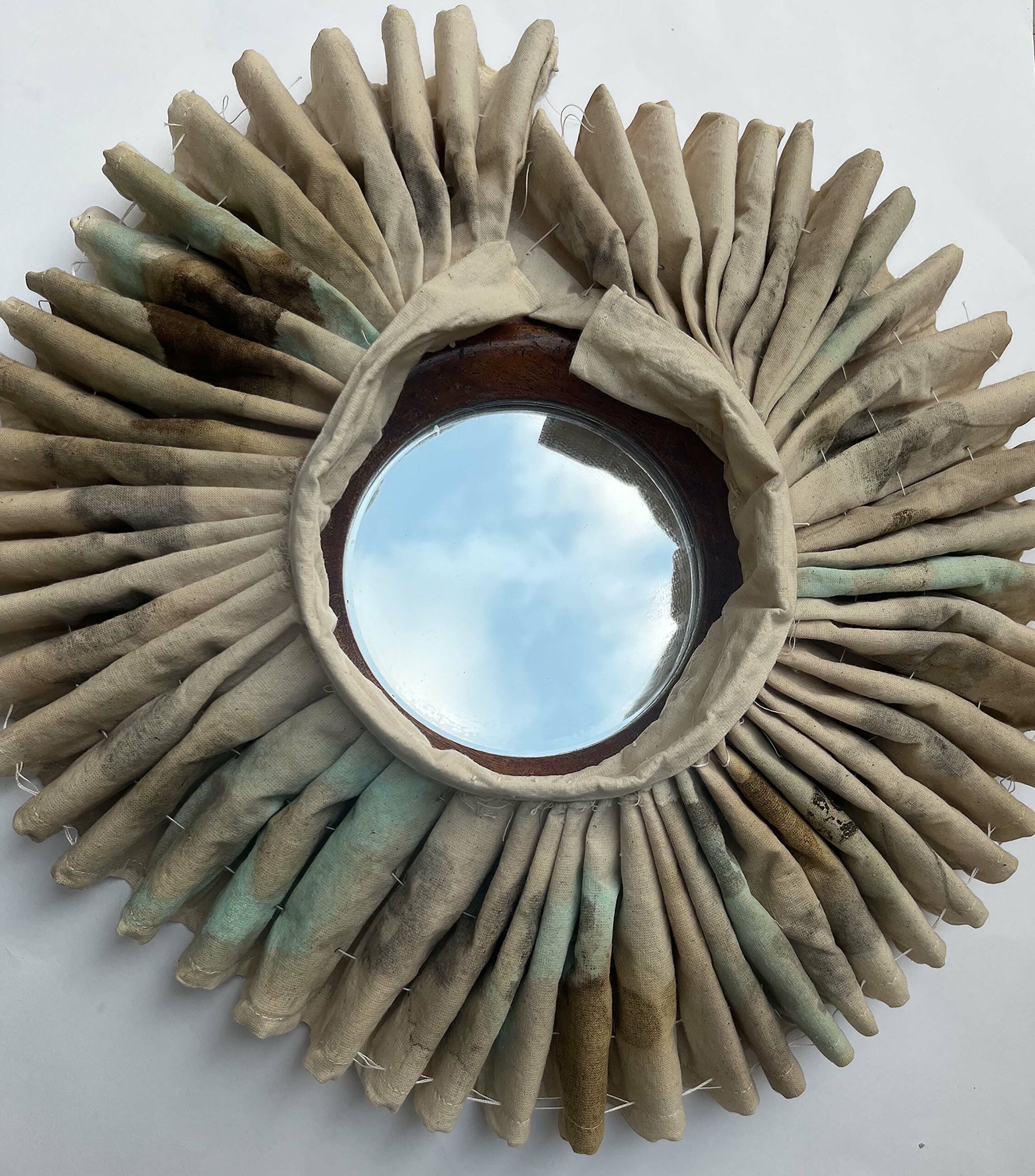
This performance talk pursues Olsen’s ongoing exploration of books as wearable objects and books as forms for art writing. Her previous focus on rewilding the medieval girdle book generated both an edition of wearable girdle books and a promenade performance with a triptych of headphone tracks (Fossil Oil: a book of hours, 2024). This talk considers the history of the ruff as a wearable fashion object in relation to its materials and associated social constructions, such as sumptuary laws which attempted to regulate the transgressive explosion of Elizabethan ruffs. These ruffs were made from materials that overlap with Elizabethan bookmaking and constructions of ruffs can be glimpsed in Elizabethan visual art and writing about this art. The ruffs themselves however constituted a sign system for fashionable performances in society, on stage and in paintings. Olsen’s exploration of the ruff as a form for 21st Century bookmaking writes through aspects this cultural history to make a hybrid new form of concertina books that exist independently as bookworks and as wearable art objects. She draws on the traditional techniques of bookbinding alongside a more D.I.Y. aesthetic of punk poetic subcultures. The intervention in practice Olsen proposes is not to conflate art with writing about art but to make a new wearable form of art writing.
Redell Olsen makes work across poetry, bookworks, visual and performance texts. Recent works include: Fossil Oil: a book of hours (2025), Frownlands, 1969 (2024), Weather, Whether Plume of the Volants (Book and Exhibition 2021). Her poetry collections include: ‘Film Poems’ (Les Figues, 2014), Punk Faun: a bar rock pastel (Subpress, 2012) and ‘Secure Portable Space’ (Reality Street, 2004). She is Professor of Poetry and Poetics at Royal Holloway, University of London, where she convenes the influential Poetic Practice CW MA.
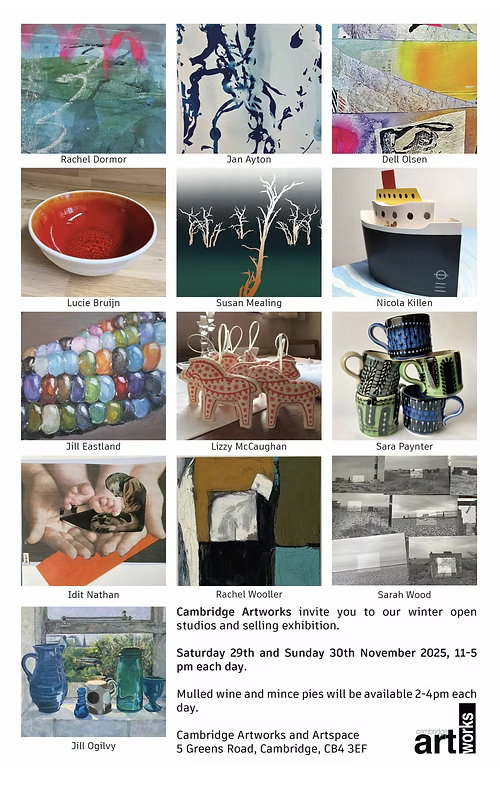
After a successful summer of Open Studios here at Artworks, we are very excited to be opening our studios for a special winter weekend event.
13 of our resident artists will be opening their doors again and showing ceramics, prints, paintings, illustrations and mixed media work. Come along and see work in progress, treat yourself to a unique piece of art or get started on your Christmas shopping!
Join Karenjit Sandhu and special guests to celebrate the Panchayat Collection and the launch of gestalt
Karenjit Sandhu’s gestalt is a new poetry collection shaped by her research into the Panchayat Collection at Tate Library. Founded in London in 1988 by Shaheen Merali and Al-An deSouza with Bhajan Hunjan, Symrath Patti and Shanti Thomas, Panchayat was a pioneering group of artists engaged in artmaking, activism and communal archiving. The Panchayat Collection brings together books, catalogues, magazines, videos, slides and ephemera that reflect this collective history and capture a wide range of artistic, cultural and political experiences, often focusing on race, class, gender, and memory.
Friday 17 th October to Sunday 19 th October 12 to 6pm
Preview Friday 17 th October 7pm to 9pm
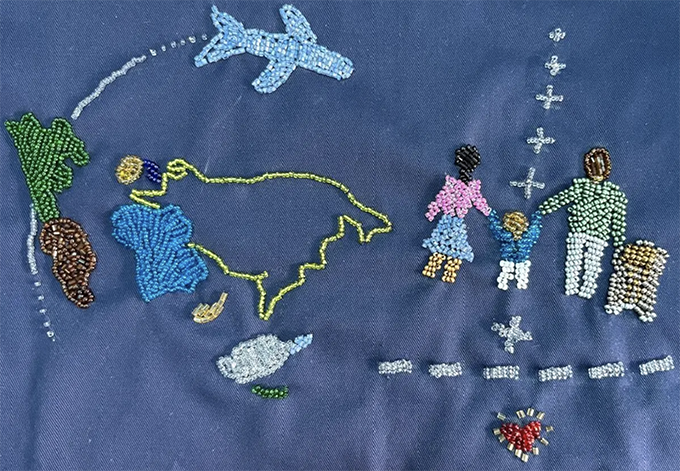
This show brings together the work of studio artists based at Cambridge Artworks and refugees in Cambridge.
Several of the Artworks studio artists have been working alongside refugees and creating art about displacement for many years, some are migrants or refugees themselves. This exhibition enables us to demonstrate our solidarity and continued support for refugees in Cambridge and the UK.
Contributing Artists
Jan Ayton Anna Brownsted Rachel Dormor Jill Eastland Kiarash Khazaei Susan Mealing Idit Nathan Mohammad Noureddini Dell Olsen Mojgan Rajabpour Sally Todd Sarah Wood Rachel Wooller John Yayen Sanam Yousef
Additional women refugees attending Cambridge Women’s Resources Centre
Group Publication – RADII book launch 26.10.24 at Small Publishers Fair 2 pm – edited by Briony Hughes in collaboration with Osmosis Press and RHUL Poetics Research centre.
Redell Olsen, from Fossil Oil: a book of hours (2024).
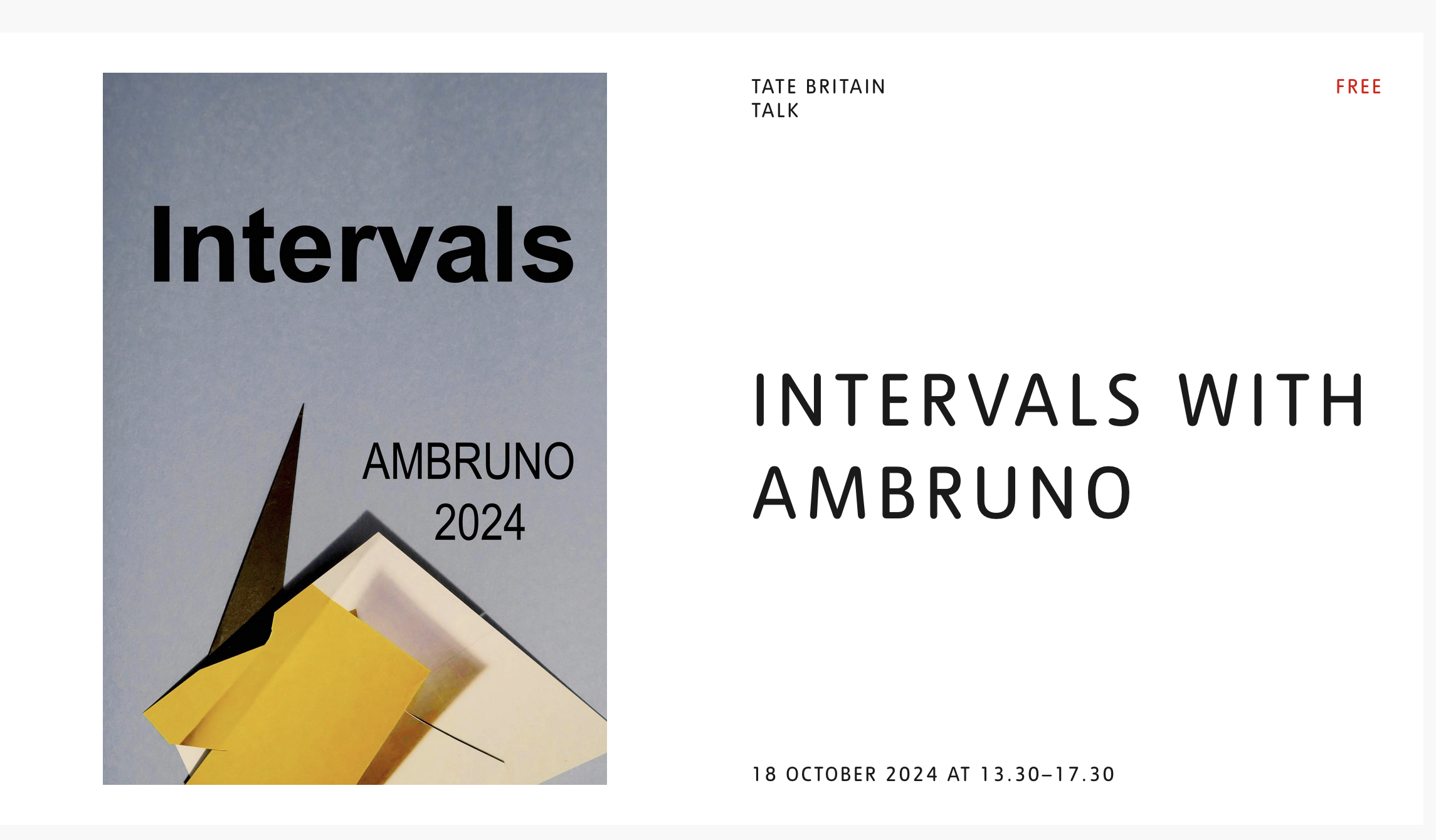
Produced as part of the Intervals Project – AMBruno, London 2024.
The poet and artist, Redell Olsen, known for her hybrid poetic texts, films and performances launches a new bookwork: Fossil Oil: a book of hours to be shown at TATE Britain as part of AM Bruno’s Intervals project on 18th October 2024 and at the Small Publisher’s Fair in Conway Hall, London on the 25th and 26th of October.
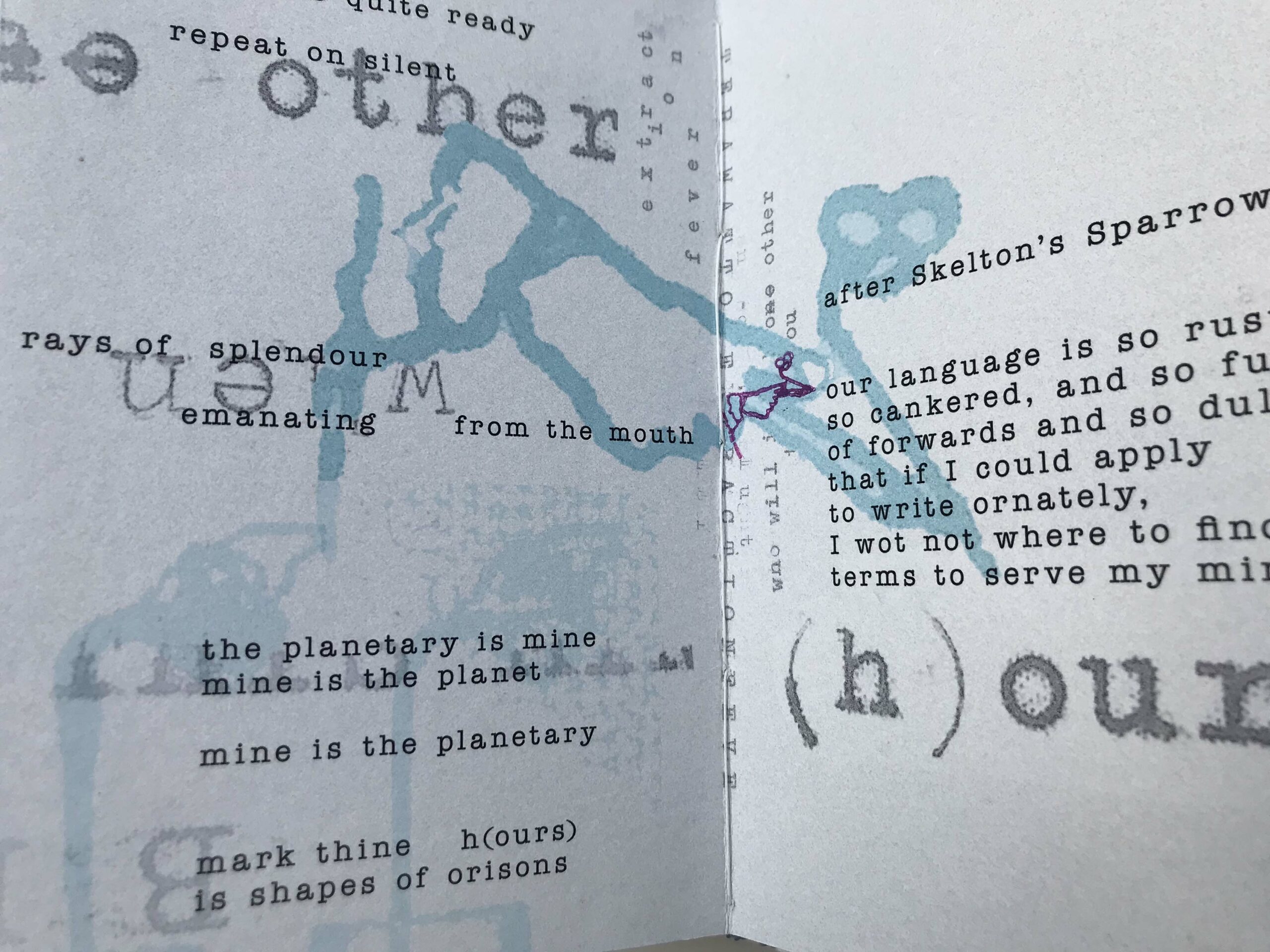
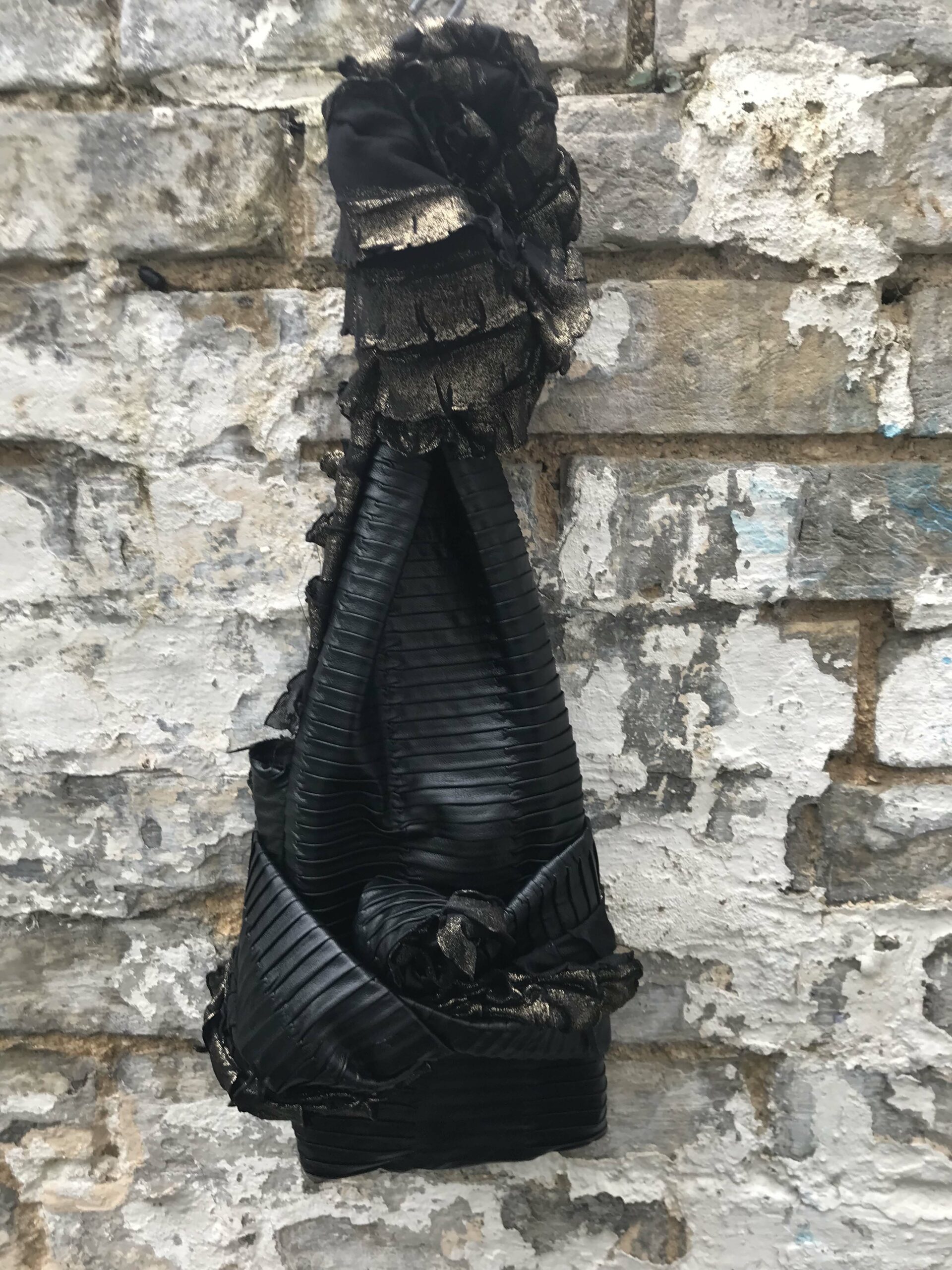
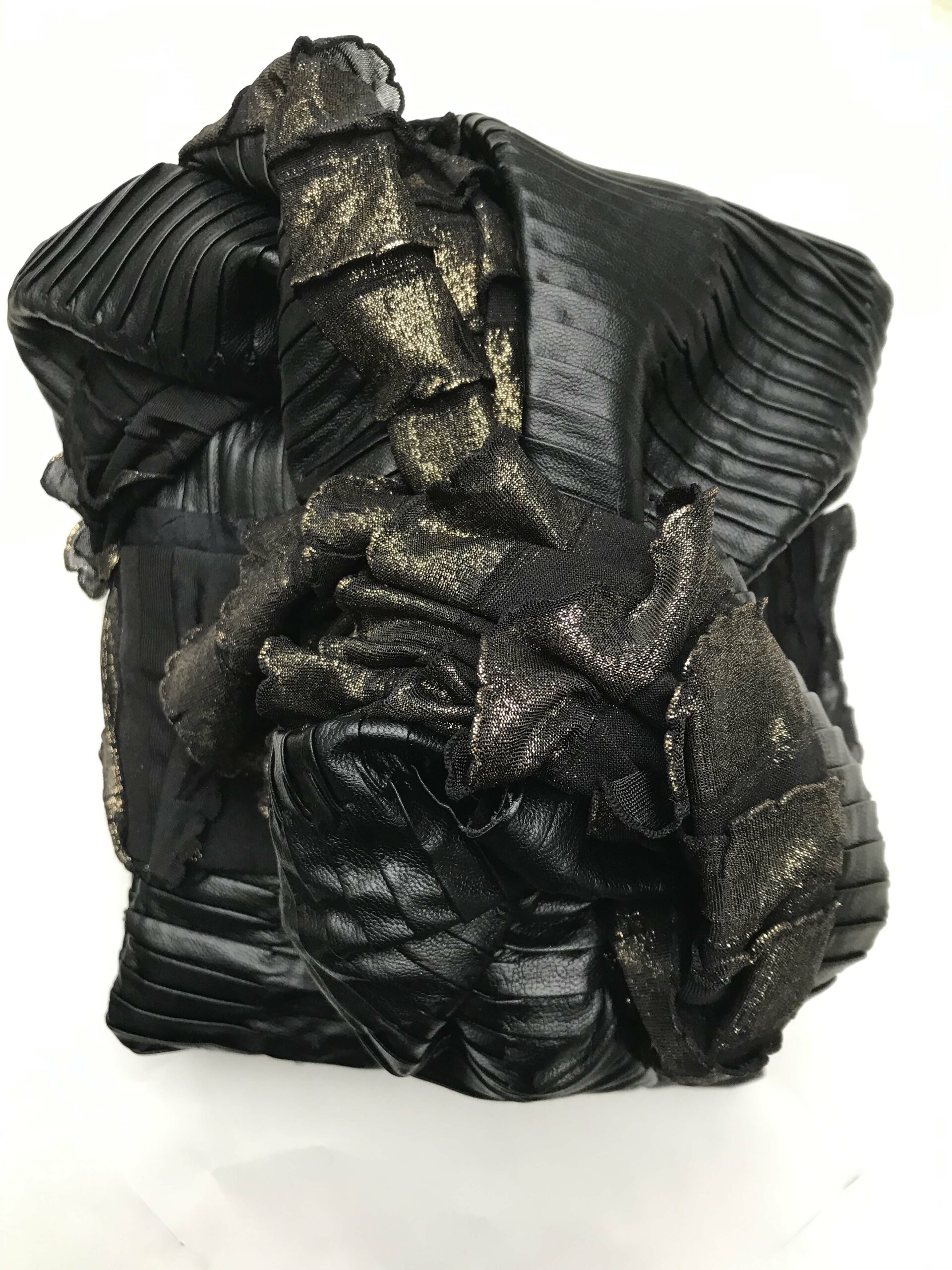
The bookwork is produced as a sewn handmade edition of twelve. It is bound with covered boards on stubs and has a semi-rigid case binding and fabric outer covering. It includes a number of handprinted elements and foldout sections produced with a variety of hand and digital processes. The form and structure are arranged with reference to Medieval Books of Hours and the book is divided into seven intervals with a different poetic text. Olsen’s intertextual poem offers a series of secular meditations for our fossil fuel era that are interrupted and playfully disrupted by traces of other books, bodies, readers and related found materials.
The binding references Medieval Girdle books which were “small portable books worn by medieval European monks, clergyman and aristocratic nobles as a popular accessory to medieval attire”. Girdle books have the common feature of a “long tapered tail with a large knot on the end” which could be tucked into the belt (Mesmer, 2015 and Smith, 2017). Olsen has carried out extensive research into the contexts of use and production surrounding this medieval wearable art form and this has informed the approach to her contemporary bookwork which is not bound in leather, but in PVC leatherette, itself a by-product of the petroleum industry. The pattern of this outer manmade material is used as the printed and conceptual starting point for many of the visual forms that emerge across the bookwork and its handmade endpapers.
Some Notes on the Individual Sections of Fossil Oil: a book of hours:
Matins and Lauds is a fold out section digitally printed on one side and hand printed on the other. It draws on the text of the 13th Century poem the Ancrene Wisse – a rule book by an unknown scribe that was commissioned by a household of female anchoresses. The poem also quotes from John Skelton’s 15th Century satirical poem on the apparent difficulties of finding a contemporary poetic language for metaphysical concerns. In Olsen’s text the material and conceptual question is how to find a poetics that can represent the historical complexities and complicities of fossil fuels as we confront the terror (terawats) of the ‘KeroSCENE’, as the exploitation of our natural resources is revealed as a finite relationship that is approaching an end.
Prime responds to illuminations found in the Hours of Mary of Burgundy which, like many Books of Hours, features a reader at a window who is also the patroness of the book. The reader is represented inside the book she is reading and perhaps writing. In the medieval illumination the view through the window establishes an apparently external landscape that also represents her interior devotion. Olsen’s text includes a series of visual poems that include printed structures, made from the pressing of the outer material of the bookwork into forms that suggest tyre tracks, the lines on the page and the stratification of rock formations. There are also intimations of windows or portals to other landscapes and spaces of conceptuality to be accessed through considerations of the materiality of the bookwork.
Terce draws on details from a series of 15C Welsh prose poems that set out a sequence of events to be noted in the run up to the end of the world alongside contemporary observations and signs of ecological ruin. It features a domesday calendar or medieval almanac as its central visual device.
Sext is a site responsive poem figured in relation to repeated visits during lunchbreaks to Lincoln’s Inn Fields in Holborn, London. The text references histories of the area alongside recorded observations and partial fragments of narrative incident. The central image of this interval or section is an image of a fuddling cup, parts of which were dug up in the vicinity in an archaeological dig. A fuddling cup is made up of “three or more jars or jugs with bodies of interconnection” and Olsen’s text seeks to establish relational links between the different elements under a slogan drawn from a 1970s Shell catalogue, ‘Oil is for Everybody’.
None tracks the histories of oil production on the Thames and the text is interspersed with a number of images that include refigured and collaged details from oil industry publications for schools.
Vespers brings to the foreground an important trope of the bookwork which is the reliance on the visual imagery of the manicule. A manicule is the medieval practice of drawing a hand in the margin of a book, alongside an important passage to be noted by the reader and subsequent readers of the work. Olsen’s bookwork visually quotes manicules by John Dee and Ben Johnson as well as at least two other anonymous hands throughout the book.
Compline (written as compiline in reference to the varied spellings of the medieval source materials) is another fold out section with digitally printed, typewritten and hand printed elements. The images and details relate to many of the previously established contexts from the other sections. The fragmentary and unstable poetic language echoes and refracts its source texts. The final section proposes a call for attention to various intervals including those of deep time as read in rock formations as well as the histories of oil production and our contemporary reliance on fossil fuels. The female figures of the Ancrene Wisse are refigured as potential activists in a contemporary era of environmental disaster and climate crisis. The reader is invited to join them there.
Redell Olsen is a writer and artist. She has published five collections of poetry and read and performed her work in the UK, France and the United States. In 2021 she was awarded DARE Art Prize for a collaboration with Opera North and The Tetley Museum in Leeds. Her 2018 film, Now Circa, 1918 was a finalist in the AHRC Best Research in Film Award. Redell Olsen teaches at Royal Holloway, University of London. She supervises academic and practice-based Phds and directs the influential Poetic Practice CW MA.
Established in 2008, the artists’ coalition AMBruno facilitates the development and dissemination of the book as primary medium in art practice. The initiative was originated, and is overseen by Sophie Loss. The makeup of the group changes with every new project. A unique feature of this initiative is that books are produced to a set theme for each annual project. The final works may be diverse in form and approach, but all have the thread of the originating topic running through.
AM Bruno – Intervals at TATE: https://www.tate.org.uk/whats-on/tate-britain/intervals-with-ambruno
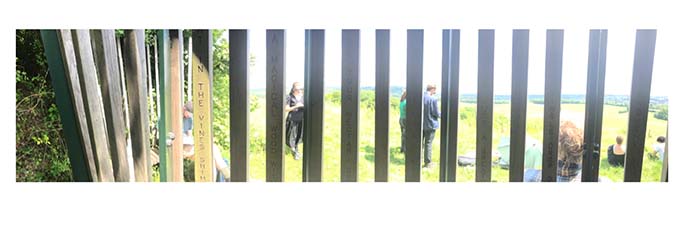
‘Writing the Radius’ Art-Writing Workshop – Poetic Practice and Surrey Hills Arts
Summer 2024 workshops in collaboration with Surrey Hills Arts. Student placements and planned publications / exhibition in Autumn 2024. Writing and art in response to site, art and environment.
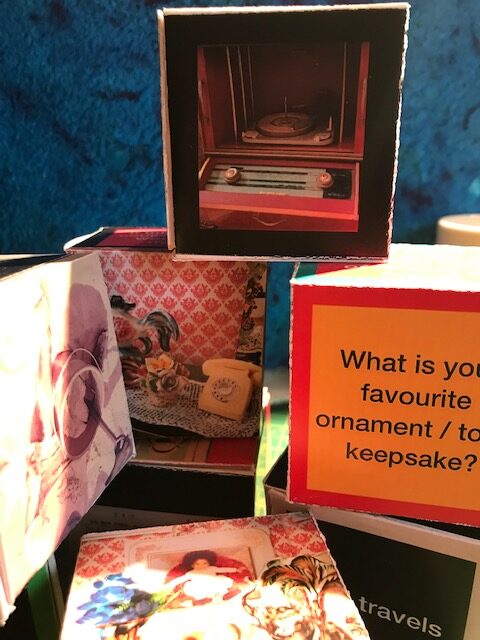
Creative Cube Prompts for Family Workshop July 2024 BCA
A creative workshop at BCA with Lewi Mondal. Participants were encouraged to write or draw in response to a series of cubes desgined for the workshop by me. The cubes used images from the current exhibition at BCA on living rooms by Tony Fairwearther. I hope to use the cubes in other contexts and workshops and to develop further projects with BCA and other museum collections and archives. The cubes feature prompts for making, drawing, writing, remembering and imagining connections between personal and public archives that were suggested through play with the cubes themselves…